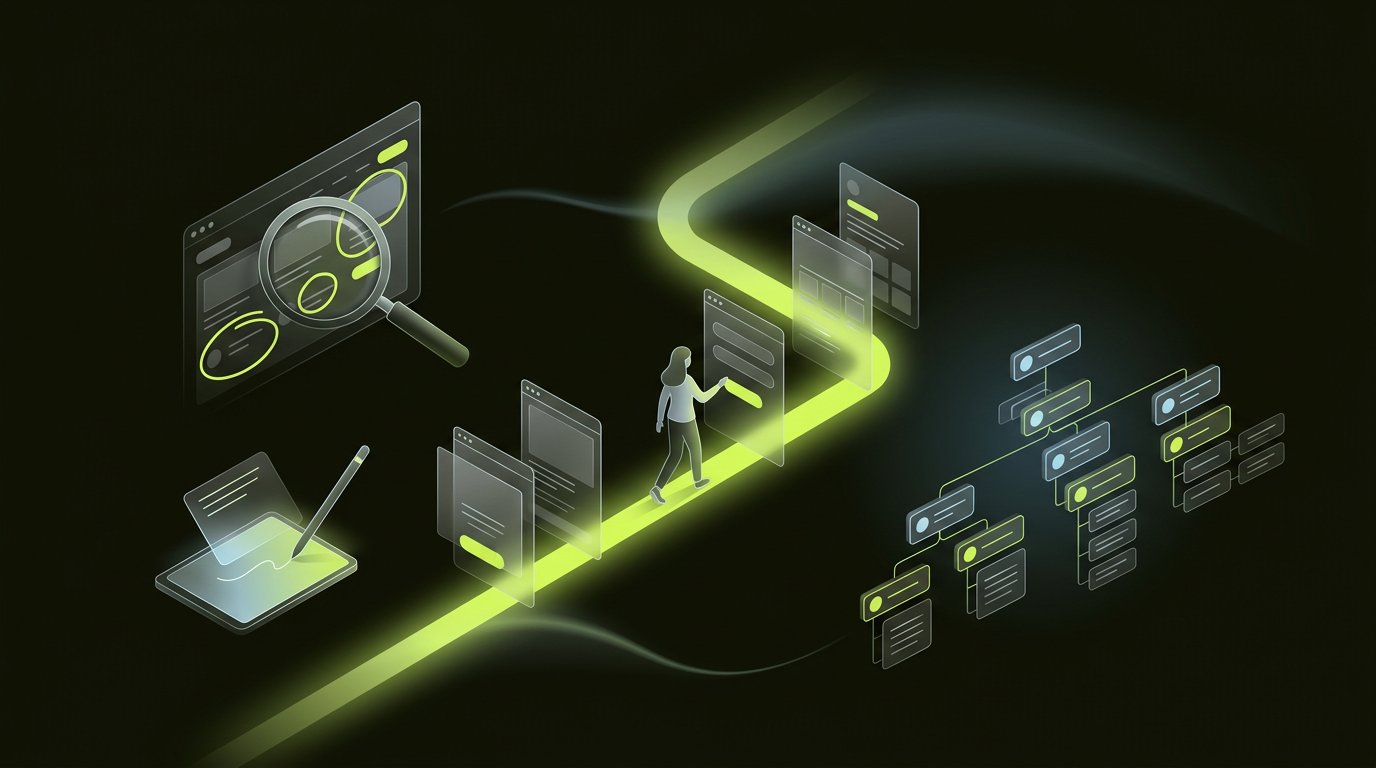
A design sprint compresses months of debate into five days — Monday's challenge becoming Friday's tested prototype in front of real users. Facilitated professionally, sprints cost ₹5–15 lakh ($8,000–25,000); run internally, they cost a week of five people's time. They are the fastest honest path from big question to tested answer — and, misapplied, expensive theatre. This is the guide to both halves.
The five days
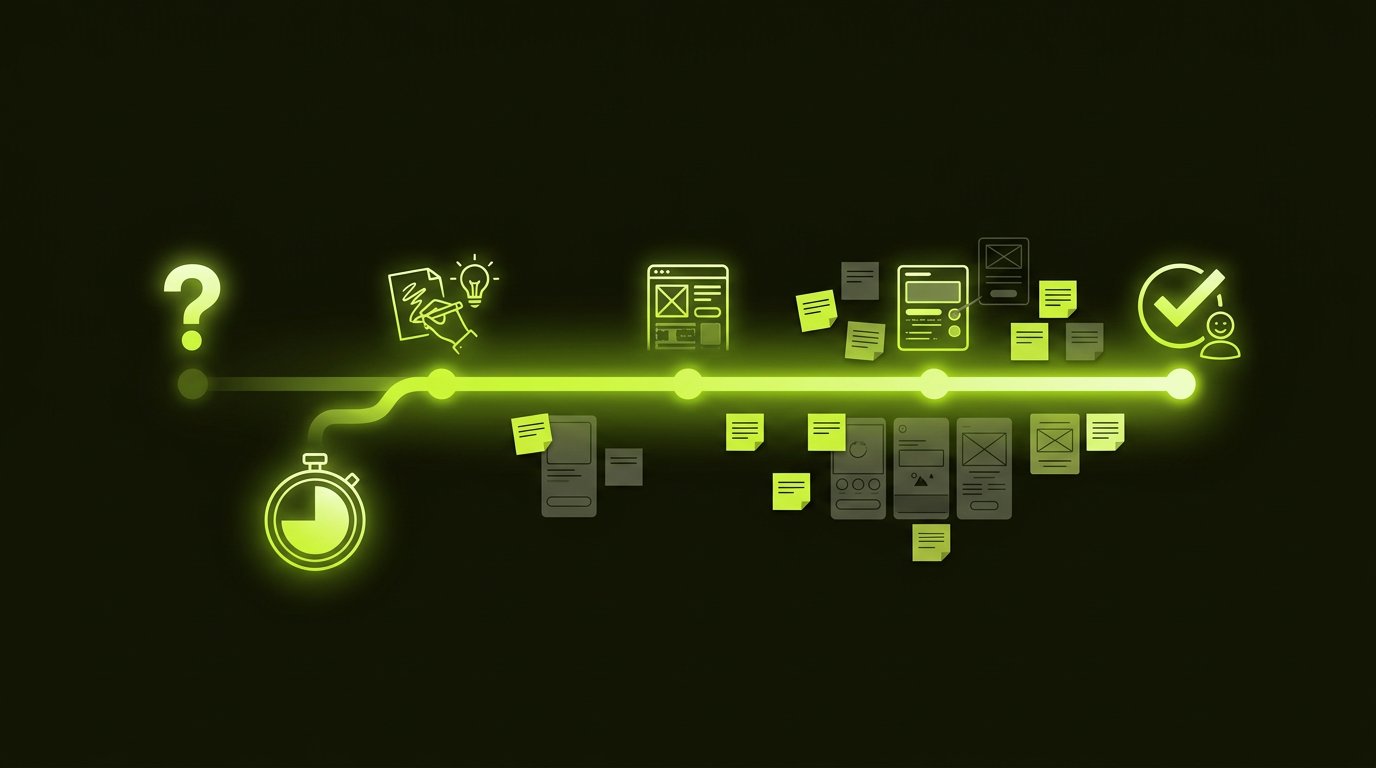
- Monday — Map: the challenge defined, the target journey mapped, experts interviewed; the week aims at one decisive moment
- Tuesday — Sketch: competing solutions sketched individually — quantity and divergence before convergence; the wireframe discipline applies: structure before polish
- Wednesday — Decide: the strongest solution elements combined into one storyboard; the group critiques against the Monday goal, not taste
- Thursday — Prototype: a realistic facade built fast — Figma prototype or hacked-together screens; fidelity just high enough to test
- Friday — Test: five target users attempt the journey; the team watches, notes, and the verdict lands by dinner
What sprints actually solve
- The stalled decision: weeks of circular debate resolved by a tested artifact instead of another meeting
- The big bet de-risked: the new feature, the new market entry, the repositioning — tested before the build investment
- The alignment problem: stakeholders who experienced the same Friday test argue less on Monday
What sprints do not solve
- Execution: a validated concept still needs months of building — the sprint ends where discovery hands to delivery
- Multi-faceted products: one week, one journey — platforms need sequential sprints or a discovery engagement
- Politics: sprints surface the right answer; organisations sometimes choose the familiar one anyway
When a sprint is the right tool
- A specific, important, time-sensitive question ('should checkout work this way?') — yes
- A vague ambition ('design something innovative') — no; scope the question first
- A routine feature any senior designer could validate — no; sprints are for bets, not increments
Sprint versus discovery, honestly
They overlap and they differ: discovery converts an idea into a buildable specification (flows, architecture, estimates — the deliverable is a plan); a sprint converts a question into a tested direction (the deliverable is a validated prototype). Choose a sprint when the question is 'should we, and which way?' Choose discovery when the answer is 'yes — now scope it.' Mature programs run sprints at decision points and discovery before builds; the MVP cost guide shows where the outputs land in delivery.
Running one
The ingredients: a genuinely important question, a decision-maker in the room daily, a skilled facilitator, and the discipline to test rather than celebrate. Our design team facilitates sprints in the classic format and a remote-adapted variant that holds the five-day rhythm across timezones. Book a consultation with the question you would spend five days answering — the sprint either fits it or we will tell you it does not.
Frequently asked questions.
What is a design sprint?
A five-day structured process from Google Ventures: map the challenge (Monday), sketch competing solutions (Tuesday), decide and storyboard (Wednesday), prototype (Thursday), and test with five real users (Friday). It compresses months of debate into a week and replaces opinion with evidence.
How much does a design sprint cost?
Professionally facilitated sprints run ₹5–15 lakh ($8,000–25,000) including facilitation, research recruiting and testing. Internal sprints cost a week of five people's time. The value case: de-risking a build that would cost 10–50x the sprint.
When should you run a design sprint?
At a specific, important, time-sensitive decision: a new feature direction, market entry, repositioning — a big bet worth testing before building. Not for vague innovation ambitions, routine features, or multi-faceted platforms needing sequential engagement.
Design sprint or discovery phase?
Sprints answer 'should we, and which way?' — the deliverable is a tested prototype. Discovery answers 'yes — now scope it' — the deliverable is a buildable specification with estimates. Run sprints at decision points, discovery before builds; mature programs use both.
Do design sprints work remotely?
Yes, adapted — the five-day rhythm holds with asynchronous sketching, focused decision calls, and remote testing. What degrades: the energy of collective sketching and the serendipity of the room. What improves: expert access and participant recruiting geography.
Enjoyed this? Let's talk about applying it to your product.