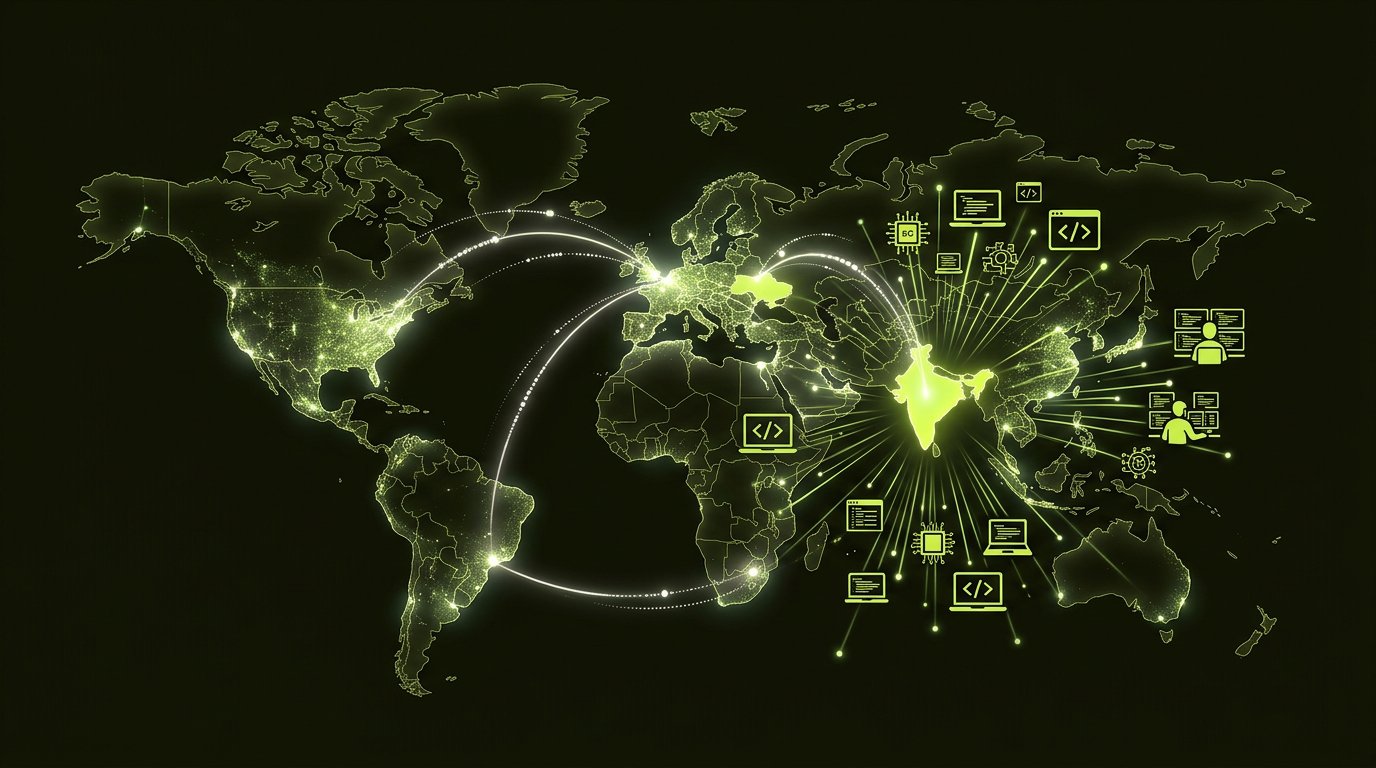
India wins on scale, price and matured delivery infrastructure; Eastern Europe wins on timezone convenience for Western Europe and niche depth in specific domains. India's senior rates run $20–60/hour against Eastern Europe's $40–70; both regions ship world-class software. The honest comparison is not which region is better — it is which region's strengths match your project, management style and timezone reality.
Written from India, with every incentive to be fair — because clients who choose wrong blame the region, not the decision.
The head-to-head
- Rates: India $20–60/hour senior; Eastern Europe $40–70. The saving delta: 25–40%.
- Talent pool: India graduates 1.5M engineers yearly; Eastern Europe produces far fewer but with strong per-capita quality. Scale favours India decisively.
- Timezone: Eastern Europe overlaps Western Europe fully and US mornings. India overlaps Europe most of the day and US evenings — a deliberate 3–4 hour window, not an accident.
- English proficiency: both strong in engineering roles; India's advantage is scale — you interview ten candidates, not three.
- Specialisation: Eastern Europe has depth in embedded, automotive, fintech and security. India dominates enterprise software, product engineering, support scale and full-stack web/mobile.
- Vendor maturity: India's outsourcing industry is three decades deep — process, compliance and contract discipline at scale. Eastern Europe's boutique shops offer tighter, more senior-feeling engagements.
Where India genuinely wins
- Scale requirements: teams of 20+ engineers, 24/7 support coverage, sustained multi-year capacity. No other region staffs at this velocity.
- Price at seniority: the 25–40% delta compounds over a multi-year engagement into real money — see our custom software costs in India breakdown.
- Full-stack product work: web, mobile, cloud, QA, DevOps and design under one roof is the default Indian agency shape, not the exception.
- Established engagement models: dedicated teams, ODCs, staff augmentation — the contractual machinery exists and is battle-tested, which our outsourcing guide maps in detail.
Where Eastern Europe genuinely wins
- Western European timezones: a Berlin client working 9-to-5 with a Kyiv or Warsaw team shares every working hour — meetings happen when humans are awake, not by calendar sacrifice.
- Niche domain depth: automotive software, embedded systems, blockchain and security engineering have exceptional pockets in the region.
- Boutique seniority feel: smaller shops where every engineer is senior, and the account feels hand-held rather than account-managed.
- Cultural proximity: for European clients, fewer small frictions — holidays, humour, business etiquette — though India's two decades of distributed work has erased most of the large ones.
The honest weaknesses, both sides
India's fair criticisms: quality variance across a huge market — the gap between the best 10% and the median vendor is wider than any other region's; selection discipline is the entire game. Timezone friction with the US West Coast is real and only process (written updates, overlap windows) manages it.
Eastern Europe's fair criticisms: capacity ceilings — scaling a team from 5 to 25 in weeks rarely works; rates that keep climbing toward nearshore-parity with Western Europe; and geopolitical risk that has already redlined some countries on corporate risk registers.
The decision framework
- European client, tight timezone need, niche specialisation? Eastern Europe.
- Scale, sustained capacity, or full-stack product engineering? India.
- US client? India's evening-overlap model is built for you; Eastern Europe's afternoon overlap works for East Coast mornings only.
- Budget-first? India at the same seniority, by 25–40%.
- Trial engagement? Both regions offer it — and a two-week paid pilot answers more than any comparison article, including this one.
The answer nobody sells: both
Mature outsourcing programmes use both regions deliberately: India for scale and continuous engineering, Eastern Europe for the specialised component that benefits from timezone intimacy. The regions are not competitors in that architecture — they are complementary instruments. For most companies, though, one region done well beats two regions done experimentally: pick the primary on the framework above, run a pilot, and add the second only when a genuine need appears.
Whatever you choose
The selection rules are region-independent: named seniors you can interview, live products you can download, references you actually call, your repo and your accounts from day one. Our outsourcing hub covers the India side of that playbook — and if your answer is Eastern Europe, the vetting checklist transfers unchanged.
Frequently asked questions.
Is India or Eastern Europe better for outsourcing?
India wins on scale, price (25–40% lower at equal seniority) and matured delivery infrastructure; Eastern Europe wins on timezone overlap with Western Europe and niche depth in embedded, automotive and security. Neither is universally better — match the region to your project and timezone reality.
What are the rate differences between India and Eastern Europe?
Senior India-based engineers bill $20–60/hour; Eastern European seniors bill $40–70. The 25–40% delta compounds significantly over multi-year engagements, though rates alone never decide total cost — management quality does.
Which region is better for US-based companies?
India's evening overlap with US working hours is built for American clients, with written-update processes matured over decades. Eastern Europe overlaps only US East Coast mornings. For sustained US collaboration, India's model is the practical default.
Is quality better in Eastern Europe than India?
Quality variance is wider in India because the market is vastly larger — the top Indian firms match anyone globally, while the median varies more. Selection discipline matters more in India; Eastern Europe's smaller boutiques feel uniformly senior but hit capacity ceilings when scaling.
Can I use both India and Eastern Europe together?
Mature programmes do — typically India for scale and continuous engineering plus Eastern Europe for timezone-sensitive or specialised components. The caveat: run one region well before adding a second experimentally.
Enjoyed this? Let's talk about applying it to your product.