A mobile app costs $5,000–40,000 for a simple tool, $40,000–100,000 for a polished consumer or business app, and $150,000–300,000+ for complex platforms. In India, the same tiers run ₹3–15 lakh, ₹15–60 lakh and ₹80 lakh–2 crore+. The single biggest cost decision is made before any code: native or cross-platform. The second biggest is how many features the first version truly needs.
Those ranges are wide because app is not a product category — a habit tracker and a fintech platform are both apps. Below: realistic budgets by app type, what drives them, the costs quotes forget, and how India pricing changes the math.
App cost by complexity
- Simple app (5–8 screens, no backend): $5,000–20,000 (₹3–15 lakh). Calculators, trackers, tools. One platform, standard UI, offline-first.
- Data-driven app (backend, accounts, sync): $20,000–60,000 (₹15–45 lakh). Feed, profiles, notifications, an admin panel nobody budgets for until they need it.
- Consumer app with polish: $60,000–120,000 (₹45 lakh–90 lakh). Social features, media, payments, onboarding that converts. The tier where design earns its budget.
- Marketplace / on-demand platform: $80,000–200,000 (₹60 lakh–1.5 crore). Two audiences, real-time logic, payments, logistics integrations.
- Fintech, healthcare, or compliance-heavy: $100,000–300,000+. Audits, certifications, security engineering, regulators.
Native vs cross-platform: the first big decision
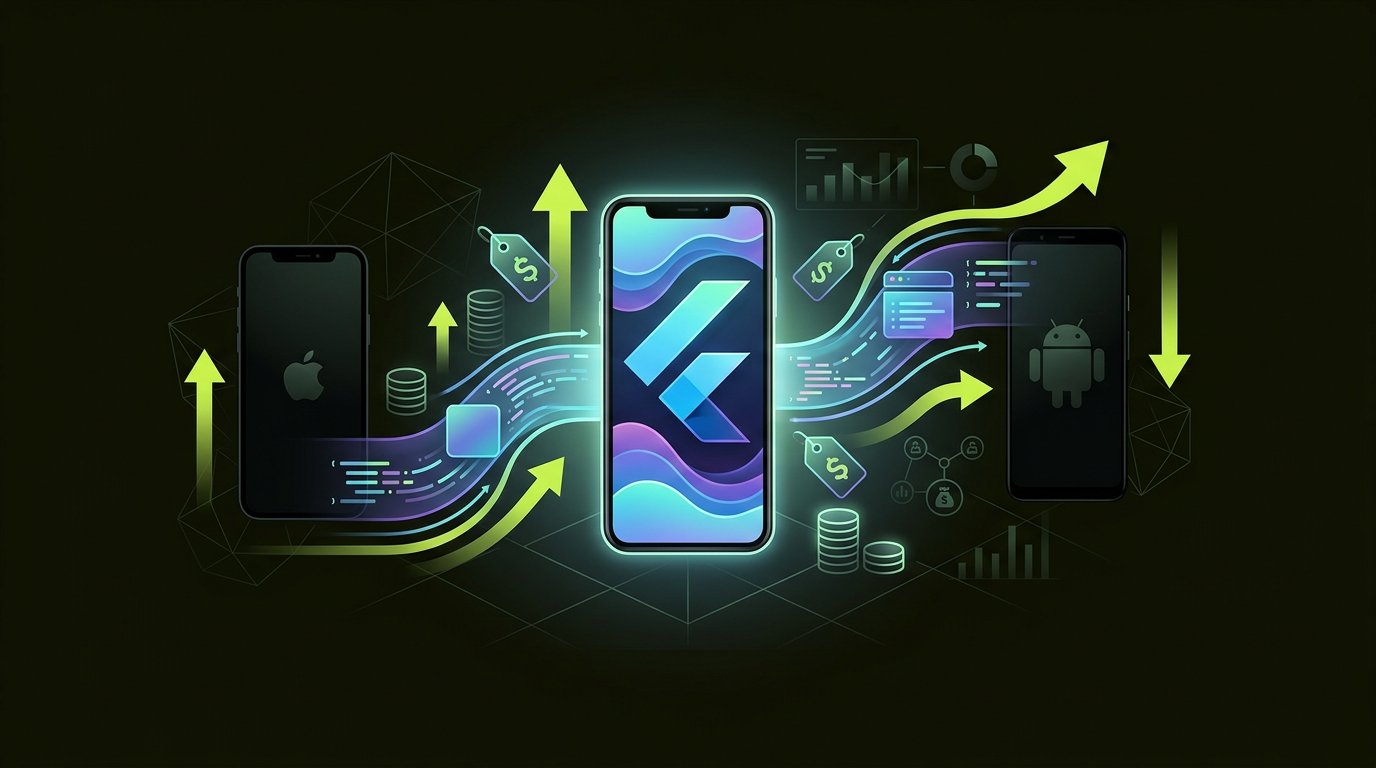
- Native (Swift for iOS, Kotlin for Android): two codebases, best performance and platform feel. Costs roughly 1.7–2x cross-platform for the same features.
- Cross-platform (Flutter, React Native): one codebase, near-native experience for most apps, ships to both stores — our Flutter development team ships most builds here. In 2026 this is the default answer for business and consumer apps — and the majority of what we ship.
- When native still wins: heavy graphics, deep hardware access, strict platform-integration features, or apps where the last 5% of platform feel is the product.
The practical rule: unless you can name the specific reason you need native, cross-platform saves 40–50% of the budget and one entire team — our Flutter vs React Native comparison covers the framework choice in depth.
What drives app cost up and down
- Screen count and states — every screen needs loading, empty, error and edge states; reality is 40% of the design work
- Backend complexity — the app is the visible third; the server, database, APIs and admin panel are the invisible two
- Third-party services — maps, payments, chat, analytics, push: each integration is negotiation plus code
- Design ambition — what AI features cost to add is its own budget line now, and a growing one
- Platforms — iOS-only for launch halves the build; adding a tablet-optimised layout adds 30–50%
- Team seniority — the classic trade: senior teams cost more per hour and ship less total hours
The costs quotes forget
- Backend and admin panel: often 40–50% of total effort, rarely in the headline number
- App store costs: Apple $99/year, Google $25 once — plus the review cycles nobody schedules for
- Infrastructure: $50–500/month at launch, scaling with users
- Maintenance: 15–20% of build cost per year — OS updates alone break something annually
- Marketing: the most forgotten number in app budgets; an app nobody finds is an expensive hobby
- Version two: real usage data will demand changes; budget the iteration before launch, not after
India pricing and the economics
India-based teams deliver the same app at ₹3 lakh to ₹1.5 crore+ ($4,000–200,000) — typically 40–60% below US rates, with the same models and cloud infrastructure available. A $100,000 US-quoted app lands at $40,000–60,000 with equivalent seniority. The requirements for the saving to be real: named seniors, weekly working builds, store accounts and code in your name, and apps in the store you can actually download.
Realistic budget examples
- Local service booking app (salon, clinic, coaching): ₹8–20 lakh, 10–14 weeks, cross-platform, simple backend
- Ecommerce app on existing inventory: ₹15–35 lakh, 14–20 weeks, payments plus catalog plus order tracking
- Team/enterprise internal app: ₹10–25 lakh, 8–14 weeks, auth against existing systems, admin dashboard
- Consumer social/content MVP: ₹25–60 lakh, 4–6 months, feeds, profiles, notifications, moderation
How to budget without regret
- Scope v1 to the single core action the app exists for; everything else is version two, decided by data — the discipline that separates products investors believe in from expensive demos
- Buy a discovery phase (₹2–8 lakh): flows, screens and architecture on paper, where changes cost hours instead of sprints
- Demand weekly working builds from week two — the single best quality signal during development
- Check store readiness early: account setup, privacy compliance and review guidelines are cheap in week one, expensive in launch week
Our pricing
We publish how we structure engagements — discovery from $12,000, dedicated engineers from $4,500/month, full builds scoped after discovery — on our pricing page. For a number grounded in your actual screens rather than a rate card, our mobile app development services team quotes from your brief; book a call with it and we will tell you honestly what the first version should cost — and what it should not include yet.
Frequently asked questions.
How much does it cost to make an app in 2026?
Simple apps cost $5,000–20,000 (₹3–15 lakh), data-driven apps $20,000–60,000, polished consumer apps $60,000–120,000, and complex platforms $150,000–300,000+. India-based teams deliver the same tiers 40–60% lower.
How much does app development cost in India?
From ₹3 lakh for simple tools to ₹15–60 lakh for full consumer apps and ₹80 lakh+ for platforms. Indian teams bill $20–60/hour versus $100–200+ in the US, which is why the majority of the world's apps include Indian engineering.
Is it cheaper to build native or cross-platform?
Cross-platform (Flutter, React Native) saves 40–50% by using one codebase for both stores. Native (Swift/Kotlin) costs roughly double and wins only for heavy graphics, deep hardware access, or platform-specific experiences.
Why do app quotes vary by 10x for the same idea?
Because the idea is the small part. Quotes differ on backend depth, admin panels, states and edge cases, integrations, design ambition and team seniority. Two honest quotes can legitimately differ 3x; comparing line items, not totals, reveals which is which.
What are the ongoing costs after launching an app?
Maintenance at 15–20% of build cost per year (OS updates break things annually), infrastructure at $50–500+/month, store fees, and marketing — the most under-budgeted line in app planning. Budget version two from day one; real usage data always demands changes.
Enjoyed this? Let's talk about applying it to your product.