SaaS onboarding is the highest-leverage work in the product: disciplined onboarding engineering lifts trial-to-paid conversion 6–20% — revenue from the traffic you already have. The mechanism is simple and universally neglected: users convert when they reach value, and most products leave the path to value unmarked. This is the playbook: the metrics, the patterns, and the mistakes.
The metric that matters: activation
Define your activation event — the first moment a user receives the value they signed up for (first project created, first report generated, first integration live). Everything in onboarding optimises two numbers: activation rate (share of signups reaching the event) and time-to-value (how fast). Every hour shaved off time-to-value compounds into conversion, because trials are countdown clocks and confusion is the only enemy.
The patterns that work
Progressive onboarding
Ask for information in the order the product needs it, not the order the database wants it. Email plus password to start; profile details, team invites and billing collected at the moment each becomes valuable. Every field removed from step zero measurably lifts signup completion.
The checklist (still undefeated)
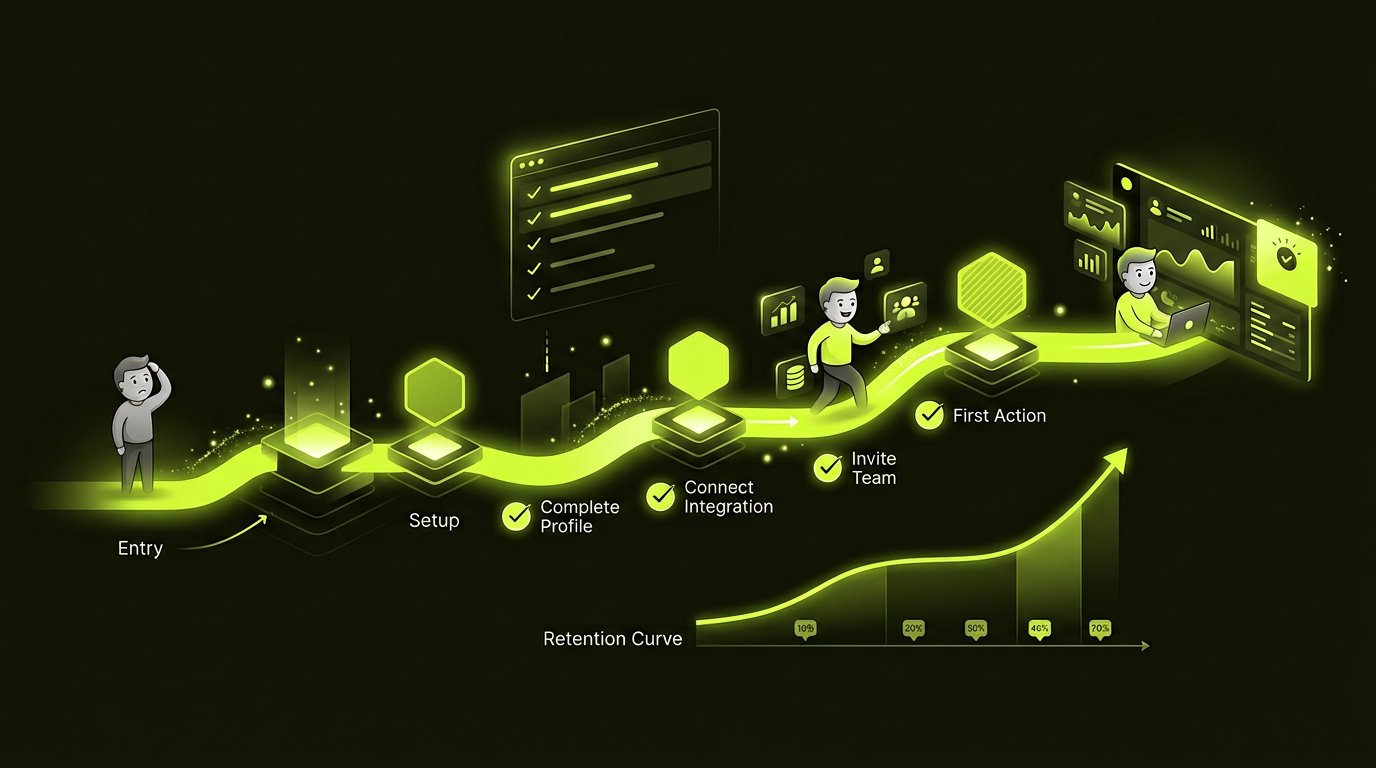
A visible 3–5 step checklist with progress — users complete shown lists at rates nothing else matches, because unfinished progress is psychologically expensive. Steps must map to activation, not feature tours.
Empty states that teach
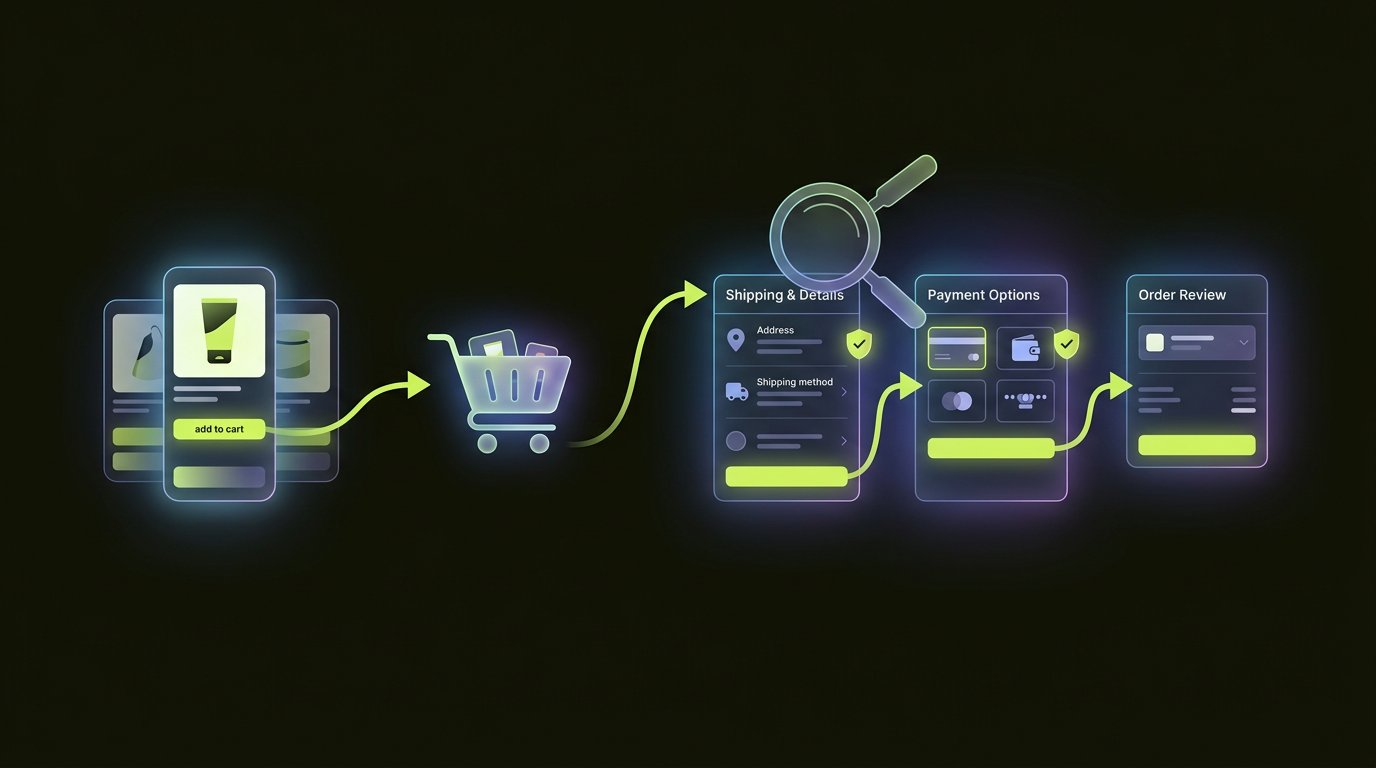
Every empty screen is an instruction opportunity: show what belongs there, why it matters, and the button that fills it. A blank dashboard is a door with no handle — see the ecommerce UX checklist for the same principle in stores.
The aha-moment, engineered
Identify the action that correlates with retention (it is almost never the signup itself), then pave the road to it: remove every step that does not lead there, spotlight the ones that do. Data over opinion — the correlation between first-session actions and 30-day retention names your aha-moment precisely.
Templates and samples
Let users start from something real: template projects, sample data, one-click imports. Blank-slate starts punish exactly the users least sure of themselves — the ones onboarding exists to save.
What great onboarding looks like
New user, five minutes: signed up with two fields, guided by a three-step checklist, first real work done from a template, value delivered, and the product has earned the next session. Every minute before value is churn risk wearing a progress bar.
Measuring honestly
- Funnel by step: signup → each checklist step → activation — the drop-off chart names the fix
- Time-to-value distribution: medians hide the tail; the slowest quartile is where churn lives
- Cohorted trial-to-paid: conversion by activation status — activated cohorts convert at multiples of unactivated ones, which is the entire business case
The UX audit checklist covers the diagnostic layer; onboarding work starts from that evidence.
The classic mistakes
- Feature tours instead of value paths — carousels nobody reads about capabilities nobody needs yet
- Front-loading setup: company profile, team invites and integrations before first value — every field is a goodbye risk
- Celebrating signup instead of activation — vanity onboarding metrics while conversion stays flat
- One onboarding for all personas — the admin and the end-user need different first five minutes
The build order
Instrument the funnel first (you cannot optimise what you cannot see), fix the biggest drop-off, ship one pattern, measure, repeat. Our SaaS development practice builds onboarding instrumentation into the foundation — activation events defined during discovery, not retrofitted — and the design team runs conversion work on the same metrics. For what this costs against the revenue it moves, book a consultation with your funnel numbers.
Frequently asked questions.
What is SaaS onboarding?
The guided path from signup to first value: progressive information collection, a checklist mapping to activation, empty states that teach, and templates that let users start from something real. Its success metrics are activation rate and time-to-value — not signup counts.
How much does onboarding affect trial-to-paid conversion?
Disciplined onboarding work lifts trial-to-paid conversion 6–20%. Activated cohorts convert at multiples of unactivated ones — the entire business case is paving the path to the value moment rather than leaving users to find it.
What is a good activation rate for SaaS?
Most products activate 25–45% of signups; well-engineered onboarding pushes above 60%. The honest comparison is your own funnel by step — the drop-off chart names exactly where users are lost.
Should onboarding use a checklist?
Yes — visible 3–5 step checklists with progress remain the most effective onboarding pattern because incomplete progress motivates completion. The steps must map to activation milestones, not feature tours.
What is the biggest onboarding mistake?
Front-loading setup: company profiles, team invites and integrations before first value. Every field before the aha-moment is churn risk; collect information at the moment it becomes valuable to the user.
Enjoyed this? Let's talk about applying it to your product.